Communication Beyond Words Series
April 11, 2026virtual
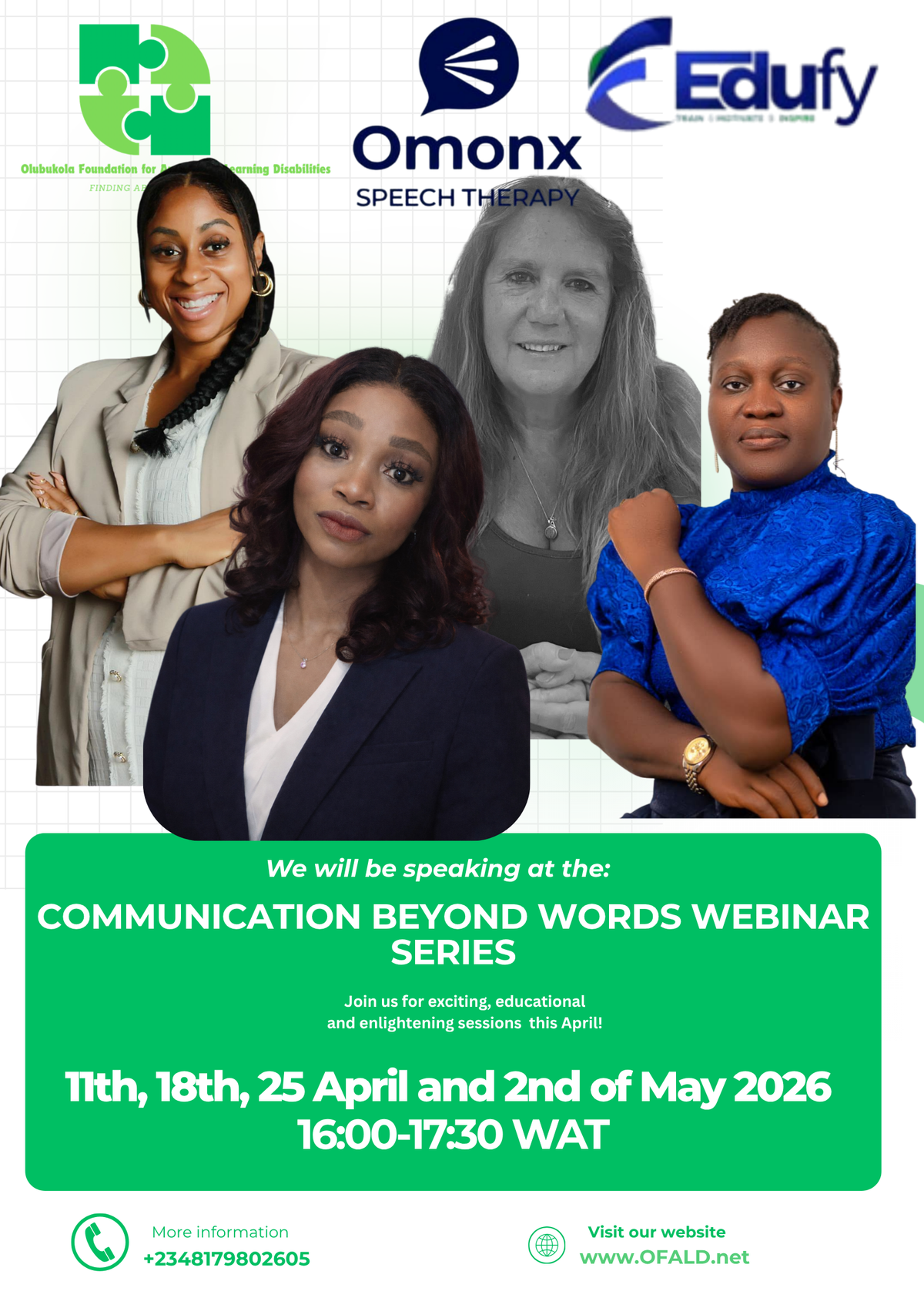
Communication and disability refers to the ways in which different disabilities can affect how a person understands, expresses, and interacts with others. Disabilities may influence speech, language, hearing, cognition, social interaction, or physical ability — and each person’s communication profile is unique. Some individuals may communicate verbally, while others rely on gestures, signs, pictures, assistive technology, behaviour, or a combination of methods. Disabilities such as autism, intellectual disability, cerebral palsy, hearing impairment, learning disabilities, and developmental delays can shape how a person processes information, expresses needs, or engages socially. The key principle is that communication is not limited to speech. Every behaviour, movement, sound, or expression can carry meaning. When environments, attitudes, and communication styles are adapted, people with disabilities can participate fully, express themselves confidently, and build meaningful relationships. An inclusive approach recognises strengths, reduces barriers, and ensures that every individual — regardless of ability — has the right to be heard, understood, and respected.
The Olubukola Foundation for Autism and Learning Disabilities (OFALD) successfully organized and hosted a four-week webinar series titled Communication Beyond Words. The webinar was held on the 11th, 18th, and 25th of April, and the 2nd of May, with each session running from 4:00 PM to 5:30 PM (WAT). Conducted virtually, the series was open to teachers, parents, caregivers, professionals, and members of the public who were interested in learning more about autism, intellectual disabilities, and inclusive communication practices.
The webinar series was conceived as part of OFALD's commitment to promoting awareness, understanding, and inclusion for individuals with autism and learning disabilities. The training sought to educate participants on the importance of communication beyond spoken language while addressing widespread misconceptions about individuals with intellectual disabilities. Through this initiative, OFALD aimed to challenge the negative perception that individuals with intellectual disabilities are incapable, defective, or burdensome, and instead promote the understanding that they are individuals deserving of dignity, respect, and meaningful engagement.
Attendance throughout the series averaged approximately twenty participants per session. Participants included teachers seeking practical classroom strategies, parents and caregivers looking for ways to better support their children, and other stakeholders interested in disability inclusion and communication.
The first session was facilitated by Adewumi Adeyemi, OFALD's Executive Director and focused on the concepts of Total Communication and Active Support. Participants were introduced to the broader meaning of communication and the understanding that communication extends beyond spoken words to include gestures, facial expressions, behaviors, and other forms of expression. The session explored the reasons people communicate, different forms of communication, barriers that may prevent effective communication, and the concept of communication pressure. Participants gained valuable insights into how communication challenges can affect individuals with autism and learning disabilities and how supportive communication practices can improve understanding and engagement.
The second session featured Funke Omonkhegbe, a Speech and Language Therapist and Clinical Director of Omonx Speech and Language Therapy. The presentation focused on early intervention strategies and practical support systems for children with communication needs. Participants learned about the importance of early identification of developmental and communication challenges, individualized care planning, and practical ways to support children in everyday settings. The session highlighted the significant impact that timely intervention can have on a child's communication development and overall quality of life.
The third session was facilitated by Sharon Hambley, Speech and Language Technician with the Cornwall Foundation Trust, NHS England Learning Disability Team. Her presentation emphasized that communication goes far beyond verbal speech and explored alternative ways through which individuals communicate. Participants were introduced to keyword signing and received practical demonstrations on how signing can be used to support
communication, understanding, and participation for individuals who may experience difficulties with spoken language. The session was particularly engaging as it provided participants with practical skills that could be applied immediately in their interactions with children and adults with communication needs.
The final session was facilitated by OFALD's Executive Director and focused on enhancing effective communication in homes and classrooms. The discussion centered on creating inclusive communication systems that accommodate diverse communication needs and ensure that every individual has the opportunity to express themselves and be understood. Participants explored strategies for fostering communication-friendly environments and learned practical approaches that can be implemented by educators, parents, and caregivers.
Participant engagement throughout the webinar series was encouraging. Each session concluded with interactive question-and-answer segments during which participants sought guidance on real-life communication challenges they encountered with children and adults with intellectual disabilities. The discussions reflected a genuine desire among participants to improve their communication practices and better support individuals with diverse communication needs.
As part of the webinar series, OFALD also announced a partnership with Omonx Speech and Language Therapy to provide free speech and language therapy services for five children.
The impact of the training was evident in the feedback received from participants. One participant shared that she had an upcoming meeting with a child with an intellectual disability and initially felt uncertain about how to approach the interaction. Following the training, she reported feeling more confident and informed, enabling her to successfully navigate the meeting and provide meaningful recommendations. Feedback such as this highlighted the practical value of the knowledge and skills shared throughout the series.
Despite the success of the program, a few challenges were encountered. Attendance varied across sessions, and occasional network and connectivity issues affected participation due to the online nature of the training. Nevertheless, participants remained engaged, and the overall objectives of the webinar series were achieved.
The success of the Communication Beyond Words webinar series reinforced the need for continued training and awareness initiatives in the areas of autism, learning disabilities, and inclusive communication. Building on the momentum generated by the program, OFALD subsequently organized a teachers' training workshop in Osogbo titled Diversity in the Classroom: the theory of inclusive practices. The organization also intends to expand future training opportunities by introducing topics such as Augmentative and Alternative Communication (AAC) and other practical approaches that support effective communication and inclusion.
In conclusion, the Communication Beyond Words webinar series was a successful and impactful initiative that advanced OFALD's mission of promoting understanding, acceptance, and inclusion for individuals with autism and learning disabilities. OFALD remains committed
to advancing intellectual disability inclusion through education, advocacy, and capacity-building initiatives. The insights gained from this webinar series will inform future programs as the organization continues to empower parents, educators, caregivers, and communities with the knowledge and tools needed to foster more inclusive and supportive environments for individuals with autism and learning disabilities.
What we learned
- communication 101
- Total communication and intensive interaction
- early intervention strategies and practical support